
You’re taking an SAT practice test when suddenly your inner critic decides to join the party.
“I have no idea how to do this.”
“I’m going to get a terrible score.”
“What if I completely mess up on test day?”
And before you know it, one difficult question has turned into a full-blown disaster movie inside your head.
So what can you do?
Here’s an unusual idea from therapist and NLP expert Steve Andreas:
Give the situation some background music.
Seriously.
You don’t necessarily have to argue with the negative thought. You don’t even have to change what the voice is saying.
Instead, experiment with adding music to the experience and notice what happens.
Your Life Already Has a Soundtrack
Think about how much music changes the feeling of a movie.
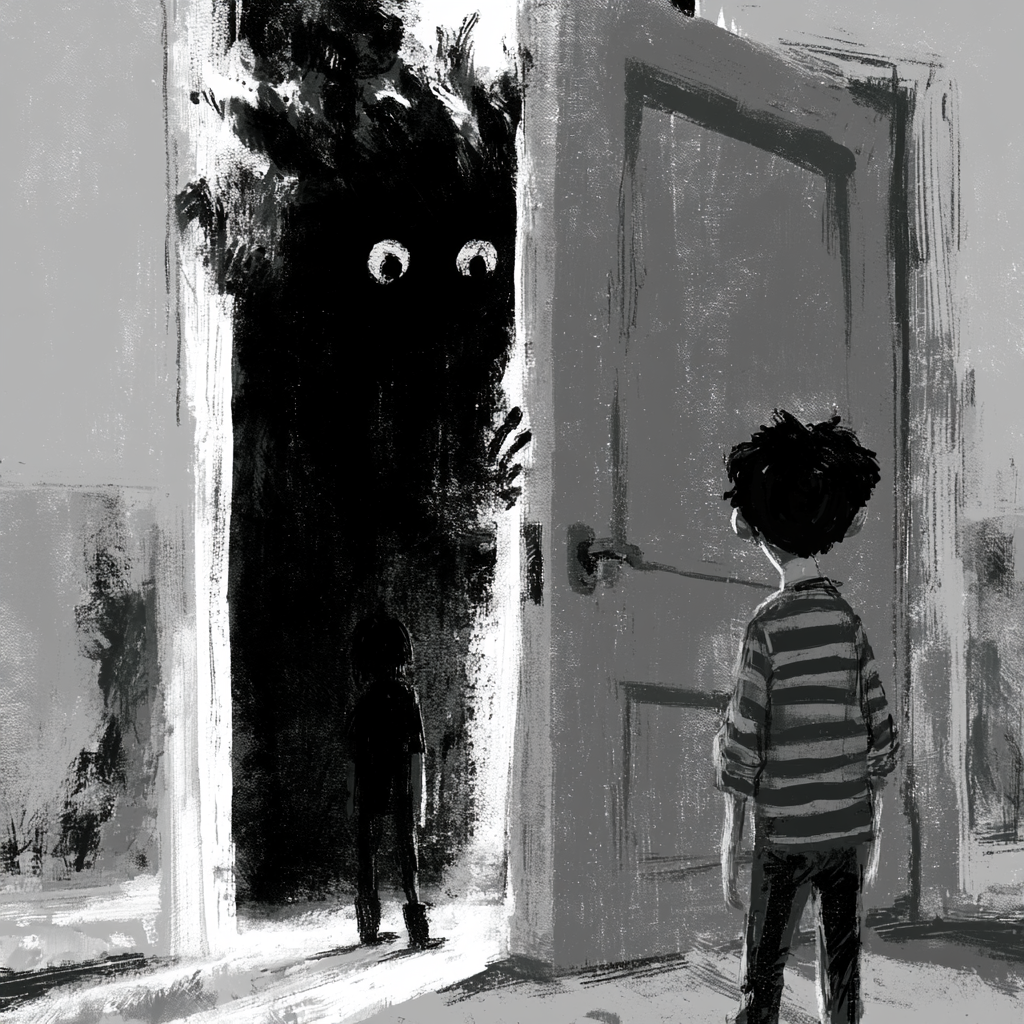
Imagine a character slowly walking down a dark hallway.
Add creepy horror music and you immediately think:
“DON’T OPEN THAT DOOR!”
But put cheerful circus music over the exact same scene, and suddenly the whole thing can seem ridiculous.
Nothing about the actual scene changed.
The soundtrack changed.
And that changed how you experienced the scene.
According to Steve Andreas, you can experiment with the same basic idea inside your mind.
Give Your Negative Self-Talk Some Background Music
Suppose you’re imagining SAT test day and your internal voice says:
“I’m going to totally blank out.”
First, simply notice how that feels.
Now imagine hearing some music in the background at the same time.
You could try:
- peaceful music
- relaxing instrumental music
- upbeat music
- inspiring music
- triumphant movie music
- goofy circus music
- ridiculously cheerful elevator music
The goal is not to find the “correct” music.
There isn’t one.
The question is:
What kind of music changes the way this experience feels for me?
Try a few possibilities and pay attention to your reaction.
You Aren’t Changing the Thought
Here’s what makes this technique especially interesting.
Suppose your internal voice is saying:
“I’m terrible at math.”
You don’t necessarily replace that with:
“I’M THE GREATEST MATHEMATICIAN WHO HAS EVER LIVED!”
Your negative voice can keep saying exactly what it was saying.
Instead, you’re changing the context surrounding the voice.
Imagine hearing “I’m terrible at math” while dramatic circus music plays behind it.
The words haven’t changed.
But your response to those words might.
Maybe they suddenly seem less serious.
Maybe you laugh.
Maybe you simply feel a little less tense.
And even a small shift can be useful.
Or Try Music That Helps You Feel Calm
You don’t have to make your inner critic funny.
Suppose you’re studying the night before the SAT and your mind keeps saying:
“Tomorrow is going to be a disaster.”
Instead of circus music, imagine adding music that you personally associate with feeling peaceful and safe.
Now notice the difference.
The thought might still be there, but perhaps it doesn’t have quite the same punch.
That’s an important idea.
The goal isn’t always to eliminate negative self-talk. Sometimes changing your relationship with it is enough.
Your Music Matters
There’s one important catch.
The music should actually make the experience better for you.
Someone else might find a certain song incredibly relaxing while you find it annoying.
That’s okay.
This isn’t a magic-song technique.
It’s an experiment.
Try something.
Notice what happens.
Keep what works.
Change what doesn’t.
Be Careful With Lyrics
Steve Andreas also points out an interesting potential problem.
Songs with lyrics contain messages of their own.
Imagine your anxious internal voice saying:
“I’m going to fail.”
Meanwhile, your imaginary background singer is shouting:
“YOU CAN DO ANYTHING! YOU’RE UNSTOPPABLE!”
That might feel inspiring.
But it could also create an internal argument.
One voice says:
“I can’t do this.”
The other says:
“YES YOU CAN!”
And now you’ve basically created a debate club inside your head.
That’s not necessarily calming.
For this reason, instrumental music can sometimes be easier to experiment with.
If you do choose music with lyrics, notice whether the words fit comfortably with the experience rather than fighting aggressively against your thoughts.

Try the SAT Soundtrack Experiment
Here’s a simple way to practice.
Think about an SAT situation that makes you somewhat nervous.
Maybe it’s:
- opening the Math section
- seeing a difficult geometry problem
- running low on time
- waiting for your SAT score
- thinking about test day
Notice any negative self-talk that appears.
Then leave the thought alone.
Don’t argue with it.
Instead, add some imaginary background music.
Try something calming.
Notice what happens.
Then try something uplifting.
Notice again.
Finally, try something completely ridiculous.
Your anxious SAT movie might sound very different when the soundtrack belongs at a circus.
The goal is curiosity, not perfection. Experiment and discover what changes your response.
Want to Explore This Further?
These ideas come from the work of Steve Andreas and his book Transforming Negative Self-Talk.
The book explores a fascinating idea: negative self-talk isn’t only about the words we’re saying to ourselves. How we experience those words internally can also influence how we respond to them.
Andreas explores ways of changing characteristics such as the location, volume, tempo, tonality, and surrounding sounds of our internal voices.
If you find these experiments useful, Transforming Negative Self-Talk is worth checking out.

Your Inner Critic Doesn’t Get to Pick the Soundtrack
SAT anxiety can make negative thoughts seem incredibly serious.
But remember:
A thought is something happening inside your mind.
And you may have more influence over how you experience it than you realize.
You don’t necessarily have to wrestle with every negative thought.
You don’t have to prove it wrong.
You don’t have to replace it with ridiculously positive affirmations you don’t believe.
Sometimes you can leave the words exactly where they are…
…and add some circus music.
Your inner critic may still have a speaking role.
But you get to choose the soundtrack.